Why Do Gold and the US Dollar Often Move in Opposite Directions? Gold vs the Dollar Index Explained
When the dollar strengthens, gold often comes under pressure; when the dollar weakens, gold tends to rise. This guide explains the two main reasons, pricing in dollars and interest rates, the exceptions when both move together, and how to use the dollar index when trading gold.
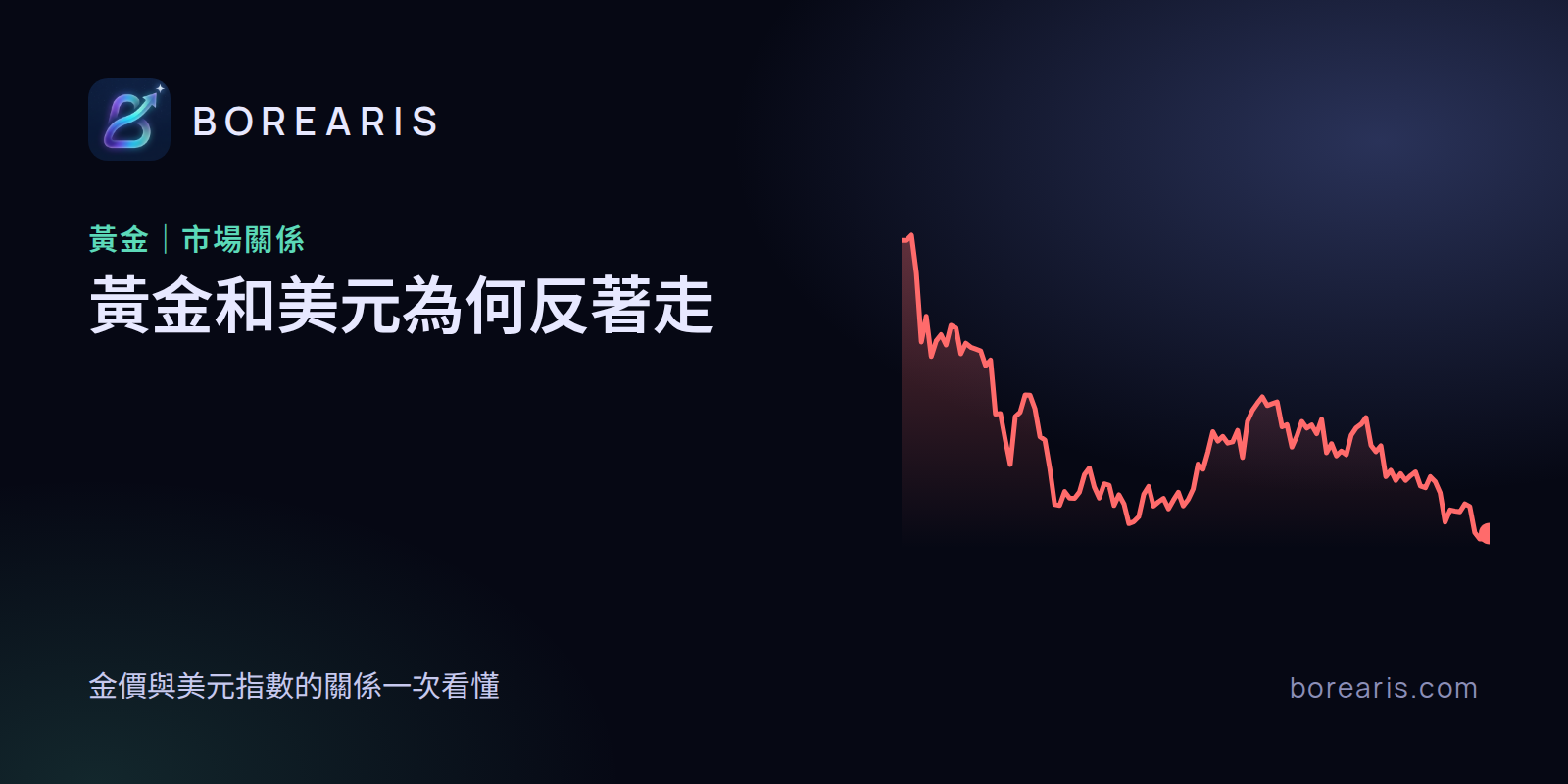
Watch the market for a while and you will notice that on days when the US dollar index is strong, gold often struggles, and when the dollar weakens, gold tends to rise. This is not a coincidence; there are clear reasons behind it. But "often" does not mean "always", and sometimes the two move together.
What is the dollar index?
The US dollar index (DXY) measures the dollar against six major currencies: the euro, yen, pound, Canadian dollar, Swedish krona and Swiss franc. The euro has by far the largest weight, about 57.6%. So a rising dollar index usually means the dollar is stronger against this basket overall, especially against the euro.
Reason 1: gold is priced in dollars
Gold is quoted in US dollars worldwide; XAUUSD is simply the dollar price of one ounce of gold. When the dollar strengthens, the same ounce becomes more expensive for buyers using euros or yen, so demand may fall. When the dollar weakens, gold becomes cheaper for them and demand tends to rise.
Seen another way, XAUUSD behaves like a currency pair: buying gold is, to some extent, selling the dollar.
Reason 2: interest rates and the cost of holding gold
Gold pays no interest. When US rates are high, especially real rates after inflation, holding dollar deposits or US Treasuries earns interest, so the opportunity cost of holding gold rises.
- When markets expect the Fed to hike or keep rates high: the dollar is usually firmer and gold comes under pressure
- When markets expect the Fed to cut: the dollar is usually softer and gold has more support
That is why Fed rate decisions (released at 3:00 UTC+8 in winter time), CPI and nonfarm payrolls (21:30 UTC+8 in winter time) often move gold and the dollar sharply at the same time. For how payrolls affect gold, see what is nonfarm payrolls.
When do they move together?
The inverse relationship is common, but it is not a rule. Three common exceptions:
- A sudden jump in risk aversion: during geopolitical conflict or market panic, money can flow into both the dollar and gold
- Central bank buying: many central banks have kept buying gold in recent years, and that demand has little to do with the dollar's strength
- Other currencies weakening on their own: if the euro or yen drops because of its own problems, the dollar index rises passively while gold barely falls
In these cases, judging gold by the dollar alone can easily go wrong.
How to use it when trading
- Check the dollar index when you look at gold: if the dollar strengthens but gold will not fall, gold's own buying is strong; if the dollar weakens but gold cannot rise, be careful
- Watch out for doubling up: buying gold and buying EUR/USD are both bets on a weaker dollar, so the risk adds up rather than diversifies
- Know the data times: gold and the dollar can both jump around US releases, and spreads widen too; check times on the economic calendar
- Do not treat it as a formula: the relationship is sometimes strong and sometimes weak; in the end, go back to gold's own support and resistance
For gold's key levels each day, see the gold analysis page. Download the Borearis app to get reminders before major data releases.
Borearis Research Team · For information only, not investment advice. Trading involves risk.