How to Trade Crude Oil (WTI): A Beginner's Guide to What Moves Oil Prices
WTI is the US crude oil benchmark. This guide explains how WTI differs from Brent, the 5 main drivers of oil prices, when the EIA inventory report comes out in UTC+8, and the 3 risks beginners must watch: contract size, rollovers and big swings.
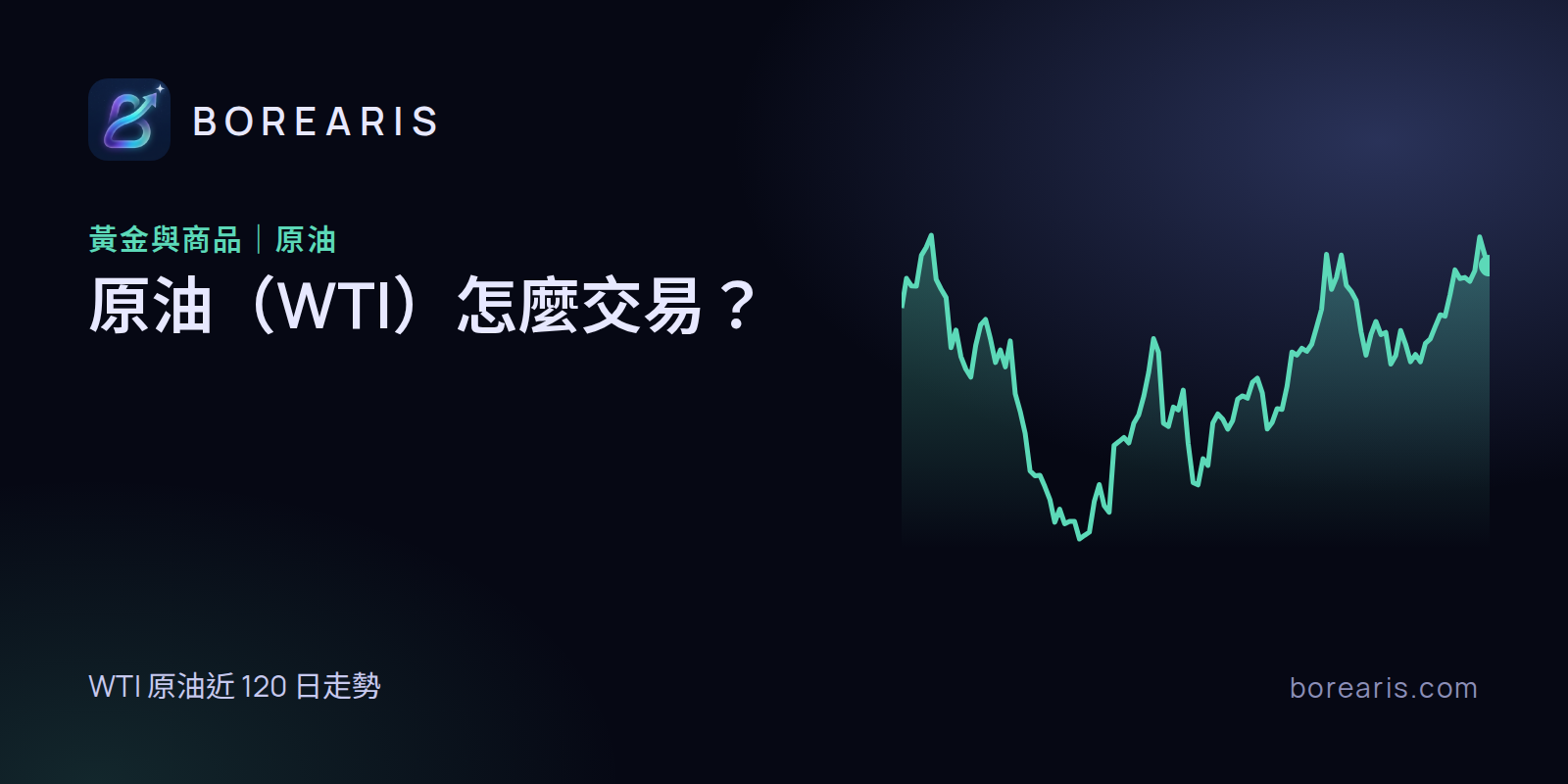
Crude oil is one of the most actively traded commodities in the world. It moves a lot and reacts to plenty of news, so for many traders it is the second market they watch after gold. This guide starts with what WTI is, then covers the main drivers of oil prices, trading hours and the risks beginners need to watch most.
What is WTI?
WTI (West Texas Intermediate) is the US crude oil benchmark. It trades as a futures contract on the New York Mercantile Exchange, with delivery at Cushing, Oklahoma. The other common benchmark is Brent, from the North Sea, which is more often used as the reference for international oil prices. The two move broadly together but trade at different prices, and WTI is usually a little cheaper than Brent.
On trading platforms, WTI is quoted in US dollars per barrel, under a symbol such as WTI, USOIL or WTIUSD depending on the platform.
5 main drivers of oil prices
- Supply: OPEC+ output decisions: OPEC+ brings together OPEC and other producers such as Russia. Its decisions to raise or cut output often move oil sharply
- Inventory data: the US Energy Information Administration (EIA) publishes weekly crude inventories, usually on Wednesdays at 11:30 pm UTC+8 during US winter time. A bigger-than-expected build is usually negative for oil; a smaller one is usually supportive
- Demand: the global economy: a strong economy means more fuel for factories and transport, which supports prices; a slowing economy weakens demand and weighs on prices
- The US dollar: oil is priced in dollars, so a stronger dollar makes oil more expensive in other currencies and often weighs on prices, though this relationship does not hold every time
- Geopolitics: conflicts in producing regions such as the Middle East or Russia can affect supply, and headlines often make oil jump
Trading hours
Most crude oil CFDs follow US futures hours: almost 24 hours a day, Monday to Friday, with a daily break of about 6:00 to 7:00 am UTC+8 during US winter time. Exact hours vary by platform. The busiest times are:
- The US session: around 10:30 pm UTC+8, when US stocks open during winter time, is the most active period
- The EIA release: in the minutes around 11:30 pm UTC+8 on Wednesdays (winter time), spreads can widen
3 things beginners must watch
- Check the contract size first: crude contract sizes differ by platform; 1 lot = 100 barrels or 1,000 barrels are both common. With 100 barrels per lot, each 1 USD move in oil is 100 USD per lot; with 1,000 barrels it is 1,000 USD, ten times as much. Check your platform's contract specifications
- Rollovers: some platforms base their crude CFDs on futures, so prices may be adjusted when the futures contract rolls to the next month. Check your platform's terms before holding overnight
- Swings are bigger than you think: moves of several percent in a day are not unusual. In April 2020, WTI futures even settled below zero, at around minus 37 USD a barrel. Extreme moves really happen, so keep your position size more conservative than usual
How to get started
- Start small, for example 0.01 lot, to get used to how it moves
- Before the Wednesday EIA release, check the time on the economic calendar
- Keep an eye on the US Dollar Index
- Work out your stop and lot size before every trade; see risk 1% per trade: how to size your position
For live WTI charts, key levels and moving averages, see the WTI crude oil analysis page. Download the Borearis app to check oil prices and set price alerts anytime.
Borearis Research Team · For information only, not investment advice. Trading involves risk.