3 Gold Trading Strategies Beginners Use Most: Trend Pullbacks, Range Trading and Post-Data Breakouts
Gold moves a lot and trades almost around the clock, and the most common problem for beginners is not knowing when to enter. This guide covers 3 widely used approaches to trading gold: what market each suits, how to enter, where to put the stop, and the usual mistakes.
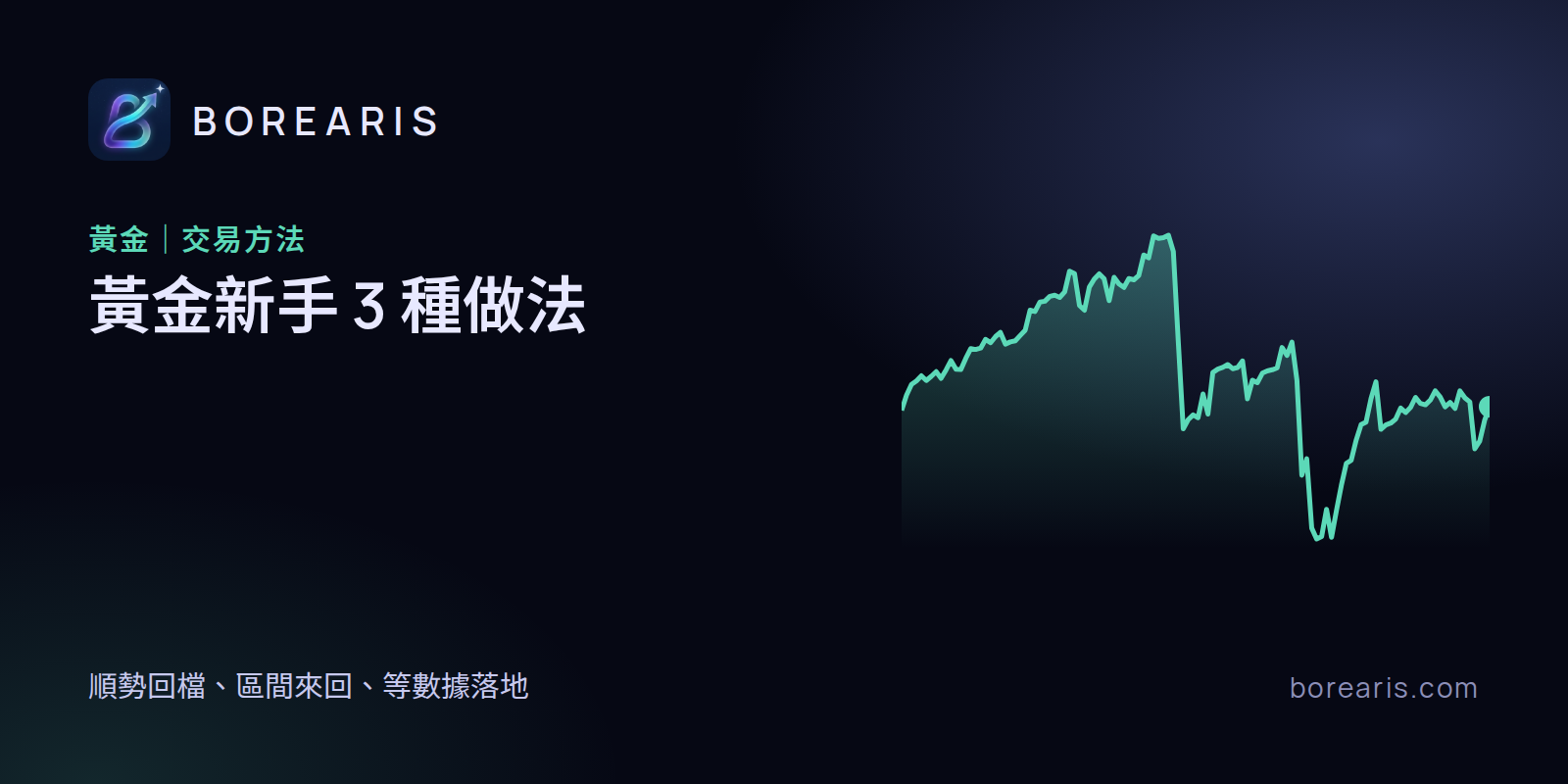
Gold moves a lot and trades for long hours, which makes it the first market for many new traders. The most common problem at the start is not knowing when to enter. Below are the 3 approaches beginners use most, each with the market it suits, how to enter, where to put the stop and the most common mistakes.
These are general trading approaches and none of them guarantees a profit. The point is to pick one, practise it until it is familiar, and control the risk on every trade.
Approach 1: trade with the trend, enter on a pullback
Suits: gold has a clear direction, for example higher highs and higher lows.
How:
- Judge the bigger direction first, for example price above the 20-day and 50-day moving averages with the averages pointing up
- Do not chase; wait for price to pull back to a support zone or the moving average
- When the pullback shows signs of stopping, such as a long lower wick or price reclaiming a short-term high, buy
- Place the stop below the pullback low; a first target can be the previous high
Common mistakes: treating a normal pullback as a reversal and selling too early, or chasing a big rally so the entry ends up far from the stop.
Approach 2: in a range, buy near support and sell near resistance
Suits: gold is moving back and forth inside a range without a clear direction.
How:
- Mark the top and bottom of the range, the levels price has touched and been rejected from several times recently. For how to find them, see how to read support and resistance
- Buy near the bottom when price shows signs of stopping; sell near the top when price shows signs of stalling
- Place the stop outside the range, with a little room
- Set the target just before the other side of the range rather than chasing the last bit
Common mistakes: keeping on fading the range after it has broken, or entering in the middle of the range where neither side has an edge.
Approach 3: wait for major data to land, then follow
Suits: days with major releases such as nonfarm payrolls, CPI or a rate decision.
How:
- Check the economic calendar first; in winter time major US data is mostly released at 21:30 UTC+8
- Do not jump in during the first few minutes: spreads are wide and price jumps around, so your fill can be far from the price you see
- Wait 15 to 30 minutes and mark the high and low after the release. When price clearly breaks one side, enter in that direction
- Place the stop on the other side of the post-release range
Common mistakes: betting on direction with a big position before the data, or chasing the first candle and getting whipsawed. For how payrolls move gold, see what is nonfarm payrolls.
Rules that apply to all three
- Set a stop loss on every trade; see where to put your stop loss
- Work out the lot size first: on most platforms 1 standard lot of gold is 100 ounces, so a 1 dollar move is worth 100 dollars. Beginners can start with 0.01 lot, where a 1 dollar move is worth 1 dollar. For the calculation, see risk 1% per trade position sizing
- Aim for a target at least 1.5 to 2 times the stop distance, so that even with a win rate below half you have a chance to break even or profit over time
- Practise one approach at a time: record the reason for every entry and exit, and add a second approach only once the first is familiar
For gold's support and resistance today, see the daily gold analysis page; for how a full plan with entry, stop and targets is written, see the swing signals. Download the Borearis app to set price alerts at key levels.
Borearis Research Team · For information only, not investment advice. Trading involves risk.