How to Trade Bitcoin: A Beginner's Guide to 3 Ways to Trade, Profit and Loss, and Risk
Bitcoin trades 24 hours a day, 7 days a week, and moves far more than gold or forex. This guide covers the basic facts, compares spot, perpetual futures and CFDs, shows how to calculate profit and loss, and lists the steps for getting started.
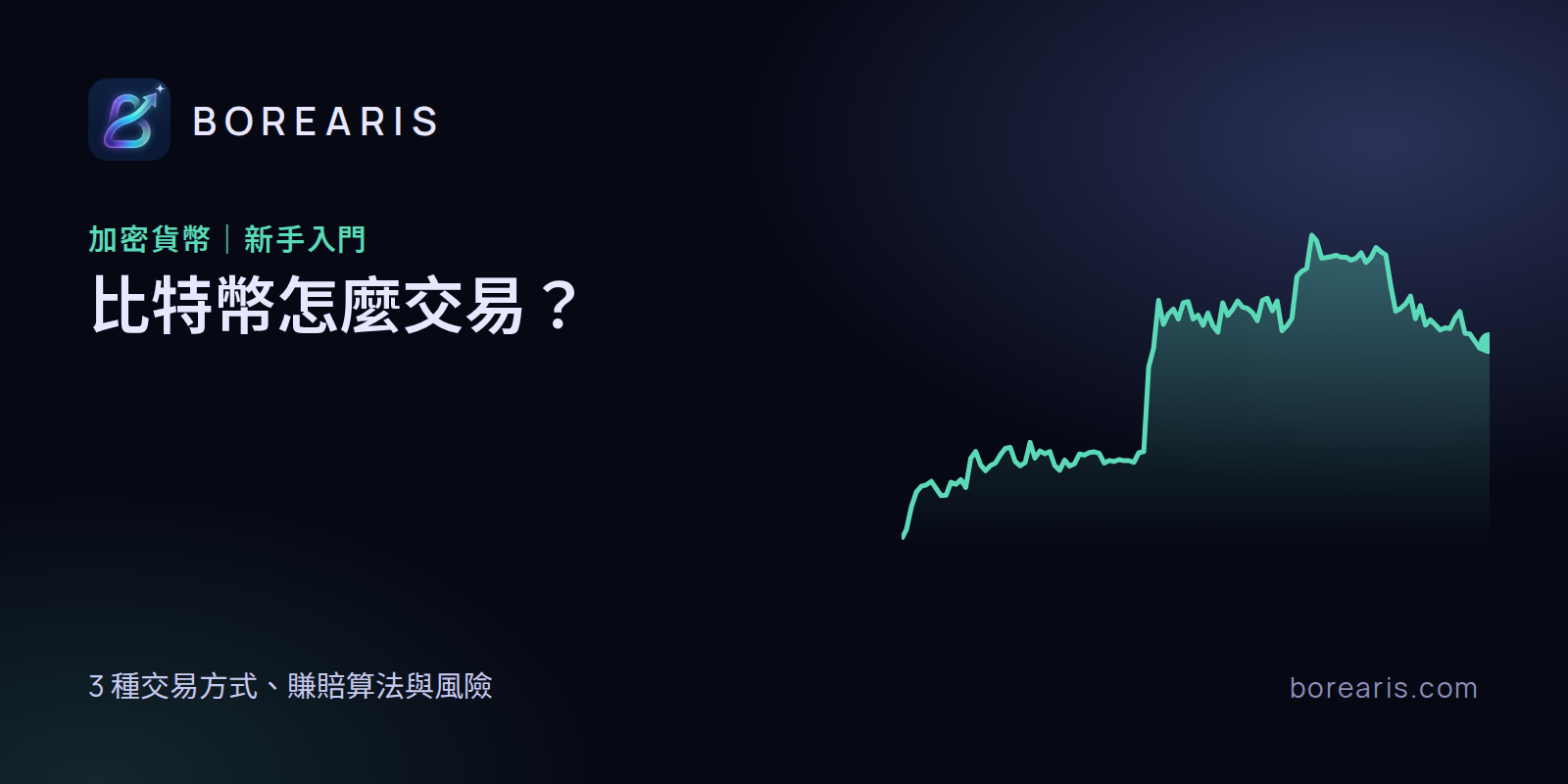
Bitcoin (BTC) is the largest cryptocurrency by market value and trades 24 hours a day, 7 days a week. It moves far more than gold or forex, which means more opportunity and more risk. Before you start, get clear on the ways to trade it, how profit and loss work, and what to watch out for.
A few basic facts about bitcoin
- Supply is capped at 21 million coins, written into bitcoin's rules
- The smallest unit is the satoshi: 1 bitcoin = 100 million satoshis, so you can buy small amounts such as 0.001 BTC
- The halving happens roughly every 4 years: the new bitcoin issued per block is cut in half; the most recent one was in April 2024
- Prices are usually quoted as BTC/USDT or BTC/USD, the dollar value of one bitcoin; USDT is a stablecoin pegged to the US dollar
How to trade bitcoin: 3 common ways
- Spot: buy bitcoin on a crypto exchange and hold what you buy. Without leverage there is no stop out; if the price falls you have a paper loss, but you can only profit when the price rises
- Perpetual futures: an exchange derivative that lets you go long or short with leverage and has no expiry, but funding payments are exchanged at regular intervals, every 8 hours on many exchanges
- CFDs: trade the bitcoin price on a forex or gold platform, with the same interface as gold. You can trade both directions with leverage, but you do not own actual bitcoin. Some platforms allow weekend trading and some do not, so check your platform's rules
A simpler learning order for beginners: understand spot first, then move on to leveraged contracts.
How profit and loss work
Whichever way you trade, the calculation is the same: amount held × price change.
- Holding 0.01 BTC, a 1,000 dollar rise makes 10 dollars; a 1,000 dollar fall loses 10 dollars
- Holding 0.1 BTC, the same 1,000 dollar move is worth 100 dollars
Be careful: how many coins one "lot" or one "contract" represents varies a lot between CFD and futures platforms. On some 1 lot is 1 BTC, on others it is not, so always read the contract specifications before trading.
Bitcoin's risks are different from gold's
- Big swings: a move of 5% or more in a day is not unusual. At an assumed price of 100,000 dollars, 5% is 5,000 dollars
- It never stops: price keeps moving while you sleep, and a position without a stop can look very different in the morning
- Thin weekends: when volume is low, one large order can push the price a long way
- Platform and asset security: choose a reputable exchange and turn on two-factor authentication; for spot holdings kept long term, consider a self-custody wallet
Steps for getting started
- Practise with a small amount or a demo account to learn how far bitcoin moves in a day
- Decide the maximum loss per trade first, then the size, just as with forex and gold; see risk 1% per trade position sizing
- Always use a stop loss on leveraged trades, and size more conservatively than you would for gold
- Watch the most volatile times, such as US data releases and the US stock market open; see when is bitcoin most volatile
For daily key levels on bitcoin and ether, see the bitcoin analysis page and the ethereum analysis page; for data release times, see the economic calendar. Download the Borearis app to set price alerts instead of watching the screen all night.
Borearis Research Team · For information only, not investment advice. Trading involves risk.