
The breakout failed. Now what? Trade the other way
The breakout failed. Most traders give up here. But a failed breakout is often a trade the other way.
- Step 1: a candle closes back inside the range. The break failed.
- Step 2: traders who chased the break are trapped. Their exits push price the other way.
- Step 3: trade toward the other side of the range. Stop beyond the failed extreme.
- If price closes back outside the range again, the setup is wrong. Get out.


The real chart used in this lesson
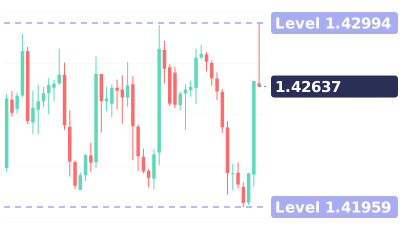
Real USDCAD 4-hour chart · Oct 2 – Oct 14
Quiz at the end: Price breaks above a range, then closes back inside. Buy, sell, or wait?
Full transcript
The breakout failed. Most traders give up here.
But a failed breakout is often a trade the other way.
This is the US dollar against the Canadian dollar, four-hour chart. For more than a week, it ranged between 1.4203 and 1.4298.
Then this candle closed below the range. Sellers jumped on the breakdown.
So, buy, sell, or wait? Run three steps.
Step one: the next candle closed back inside the range. That's the failure.
Step two: the sellers who shorted the break are now trapped, and their stops sit above.
When those stops get hit, they have to buy. That pushes price toward the other side.
Step three: buy the close back inside. Stop under the failed low at 1.4196. Target the range top.
So the answer: buy.
Here's what happened. The next candle shot up to 1.4267, and the one after hit 1.4299.
That's the top of the range, in just two candles.
One warning: if price closes back outside the range again, the setup is wrong. Get out.
Save this. Close back inside: the break failed. Trade toward the other side. Stop beyond the failed extreme.
Your turn. Price breaks above a range, then closes back inside. Buy, sell, or wait? Comment below.
Follow for one chart lesson every day.
go dot borearis dot com.
Keep watching




AI-voiced; written and reviewed by the Borearis Research Team. For education only, not investment advice. Trading involves risk.